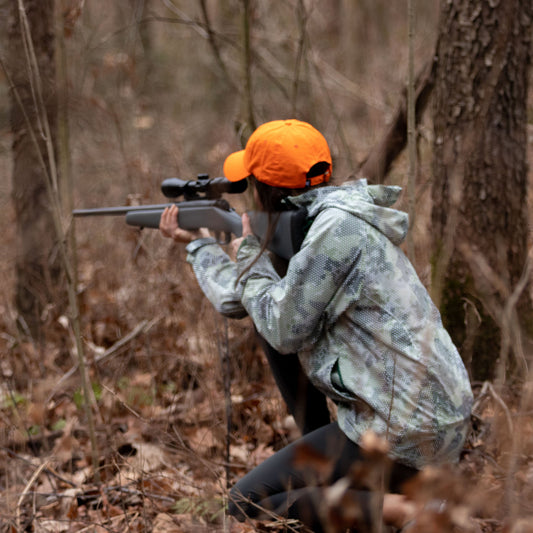
A Sportswoman's Guide to Turkey Hunting

There's something magical about a spring morning in the turkey woods. The world wakes up around you — first the songbirds, then the crows, and finally, if you're lucky, that unmistakable gobble echoing through the timber. If you've been curious about hunting but haven't taken the leap yet, turkey season might be exactly where your story begins.
Why Turkey Hunting Is the Perfect First Hunt
Turkey hunting has a way of welcoming newcomers. Here's why so many women are discovering it as their entry point into hunting.
The learning curve is forgiving. Unlike big game hunting, where you might wait an entire season for a single opportunity, turkey hunting gives you immediate feedback. You'll hear birds gobbling (or not), see how they respond to your calls, and learn something new every sit. That quick feedback loop makes it easier to build skills and confidence fast.
The gear investment is manageable. You don't need a $2,000 rifle or weeks of backcountry supplies. A shotgun, some calls, good camo, and a comfortable place to sit will get you started. You can add to your kit over time as you figure out what matters most to your style of hunting.
The season timing works. Spring turkey season falls during some of the most beautiful weeks of the year. The woods are greening up, wildflowers are blooming, and mornings are cool but not brutal. It's a gorgeous time to be outside, even if the birds aren't cooperating.
You can hunt close to home. Turkeys live in surprisingly accessible places — on public or private land and in timber or on the edges of agricultural fields. You don't need a wilderness expedition to find good hunting.

Photo by Tim Donovan/Florida Fish & Wildlife Conservation Commission via flickr
Why Spring Is the Season to Start
You might have noticed that turkey hunting happens twice a year in most states — spring and fall. If you're just getting started, spring is absolutely the season to cut your teeth.
The difference comes down to what the birds are doing. In spring, gobblers are in breeding mode. They're vocal, fired up, and actively searching for hens. When you call, you're speaking their language — imitating exactly what they're hoping to find. A tom that's ready to breed will gobble back, close the distance, and sometimes sprint into your setup. That responsiveness is incredibly rewarding for new hunters. You get feedback, you see what works, and when it all comes together, it happens fast.
Fall is a different game entirely. Breeding season is over, and turkeys have shifted into survival mode. They're flocked up — hens with their grown poults, toms in bachelor groups — and focused on feeding before winter. They're quieter, warier, and not particularly interested in a lonely hen call. Fall tactics often involve scattering a flock and then calling to reassemble the confused birds. It works, but it requires more woodsmanship and a different set of skills.
There are other differences too. Spring seasons in most states are tom-only, so you're looking for that mature gobbler with the beard and the strut. Fall seasons often allow either-sex harvest. And the woods themselves feel different — spring mornings are electric with gobbles echoing through greening timber, while fall hunts can feel quieter, more like deer hunting.
None of this means fall turkey hunting isn't worth pursuing. It absolutely is. But spring gives beginners a more forgiving classroom. The birds want to cooperate. Start there, build your skills, and then add fall hunting to your repertoire once you've got a season or two under your belt.

What You’ll Need to Wear
Nothing ruins a hunt faster than being cold, wet, or fighting with noisy fabric every time you shift positions. When a tom is working his way toward your setup, the last thing you need is gear that announces your presence.
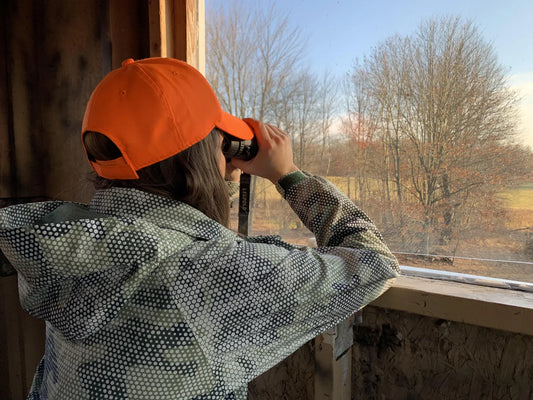
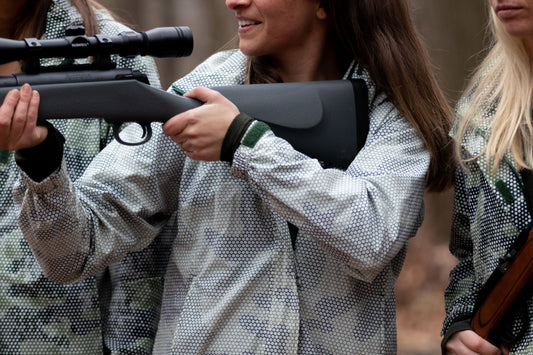
Layer for the temperature swings. Spring mornings can start near freezing and warm up thirty degrees by mid-morning. A breathable base layer, insulating mid-layer, and a shell you can shed quietly is a good formula. Our Featherweight Jacket was designed with exactly these needs — and your fit — in mind. It packs down small enough to stuff in a vest pocket, deploys silently when the weather turns, and won't swish and crinkle when you need to raise your shotgun.
Think about movement, not just warmth. Turkey hunting involves more position changes than you'd expect. You'll sit, shift, crawl to a new tree, and repeat. Our camo pocket Trail Leggings give you the stretch and flexibility to move naturally while keeping you concealed, and the pockets are deep enough to actually hold a slate call or your phone securely.
Don't forget your face and hands. Turkeys have incredible eyesight. A face mask or face paint and thin gloves complete your concealment. Choose gloves that let you feel your calls and your trigger.

Photo by Rennett Stowe via flickr
Calling 101: Keep It Simple
New turkey hunters are often intimidated by calling. The truth is, a few basic sounds executed with confidence will serve you best.
Start with three calls:
The yelp is your bread and butter — a series of notes that says, "I'm a hen, I'm here." Practice until you can do a relaxed, natural-sounding sequence of five to seven notes.
The cluck is a short, sharp single note. Think of it as a "hey" to get attention or reassure a bird that's hung up.
The purr is a soft, rolling sound content hens make while feeding. It's subtle and works well when a bird is close but needs encouragement to commit.
A few principles that help:
Less is often more. Call to get a bird's attention, then let him come looking for you. Constant calling can make you sound desperate — or worse, help him pinpoint your location before he's in range.
Match the mood. If a bird is hot and gobbling at everything, you can be more aggressive. If he's quiet and cautious, soft clucks and purrs often work better than loud yelping.
Practice before the season. Spend time with your calls at home, in the car, whenever you have a few minutes. Muscle memory matters.

Setting Up for Your Best Morning in the Blind
A ground blind changes the game. For new hunters especially, a pop-up blind is a game-changer. You can shift positions, adjust your grip, check your phone, even whisper to your hunting partner — movements that would bust you wide open if you were sitting against a tree. A blind lets you be human while you wait (and learn.) Because the hunt often comes down to those first couple hours of daylight, here's how to make them count when using a pop-up blind.
Scout before you hunt. Spend an evening or two listening for birds going to roost. Turkeys are creatures of habit — knowing where they sleep tells you where to set up before dawn. Look for strut zones, field edges they frequent, and travel corridors between roosting and feeding areas.
Set up your blind with intention. Position it where you expect birds to approach, with shooting lanes that make sense for your setup. If possible, set your blind out a few days before your hunt so birds get used to seeing it. Brush it in with natural vegetation from the area — a few branches and grass clumps go a long way toward making it disappear.
Black out the interior. Here's where your dark base layers earn their keep. The inside of your blind should be as dark as possible so your silhouette doesn't show through the mesh windows. Plan to wear camo on the walk in and out, but inside the blind, you want to disappear into shadow.
Get there early. You want to be settled in and quiet before the woods start waking up. Rushing to your spot in the gray light while birds are already gobbling is a recipe for busted hunts.
Get really comfortable. A quality blind chair or cushion is worth the investment. You might be sitting for hours, and if you're fidgeting because your back hurts or your legs are cramping, you'll make noise at the wrong moment. Set up your chair so your shooting position feels natural, and practice mounting your shotgun before birds show up.
Organize your space. The inside of a blind can get chaotic fast. Keep your calls, rangefinder, water, and snacks within easy reach but out of the way of your gun. Use the blind's built-in pockets or bring a small organizer. And silence your phone.
Mind the windows. Only open the windows you need. Every open window is a chance for a sharp-eyed tom to spot movement inside. Most hunters shoot through one or two windows and keep the rest closed or barely cracked for visibility.
Be patient. Some of the best hunts involve long waits. A gobbler might take an hour to work his way across a field to your decoys. Trust your setup, stay quiet, and let the hunt unfold.
The Real Reason to Try Turkey Hunting
Beyond the gear and the tactics, turkey hunting offers a reason to be in the spring woods when the world is coming alive. It’s also exciting — whether you fill a tag or not, that first gobbler strutting into range will have you hooked.
Still looking for quiet, functional camo and layers made to fit a woman’s body? Check out our hunting collection now.
Top photo by Buck Valley Ranch via flickr
Tags:
Previous
5 Traditions That Help Us Close Out the Season
Next
Find Your Water: The Women's Fishing Starter Kit
Related articles

Apr 30 2026
Find Your Water: The Women's Fishing Starter Kit
Nov 27 2025
5 Traditions That Help Us Close Out the Season
Sep 15 2025
Basic Scouting Tips Every New Hunter Should Know
Sep 02 2025